Wondering where to start? Supero's got an eye for that.
Every robotic finishing process starts from the same requirement: the robot needs to know where the part is, how it's positioned, and where its surfaces actually are. Without this information, sub-millimeter accurate surface finishing on complex and variable geometries simply isn't possible.
That's why the Scan Phase comes first in the Supero workflow. It's the stage where the real component is captured and converted into a usable 3D model, ready for processing.
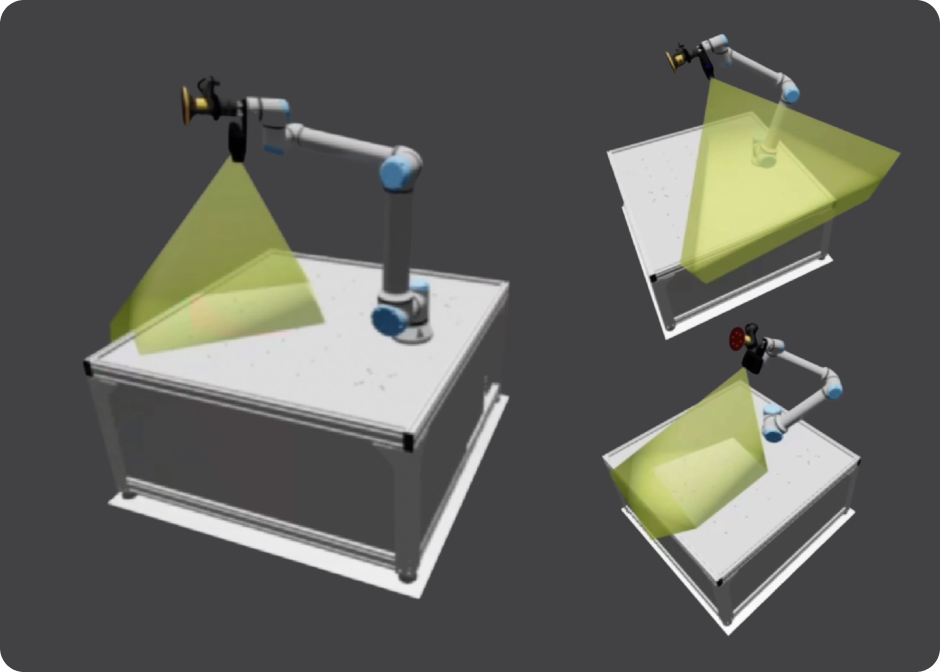
One origin, full picture.
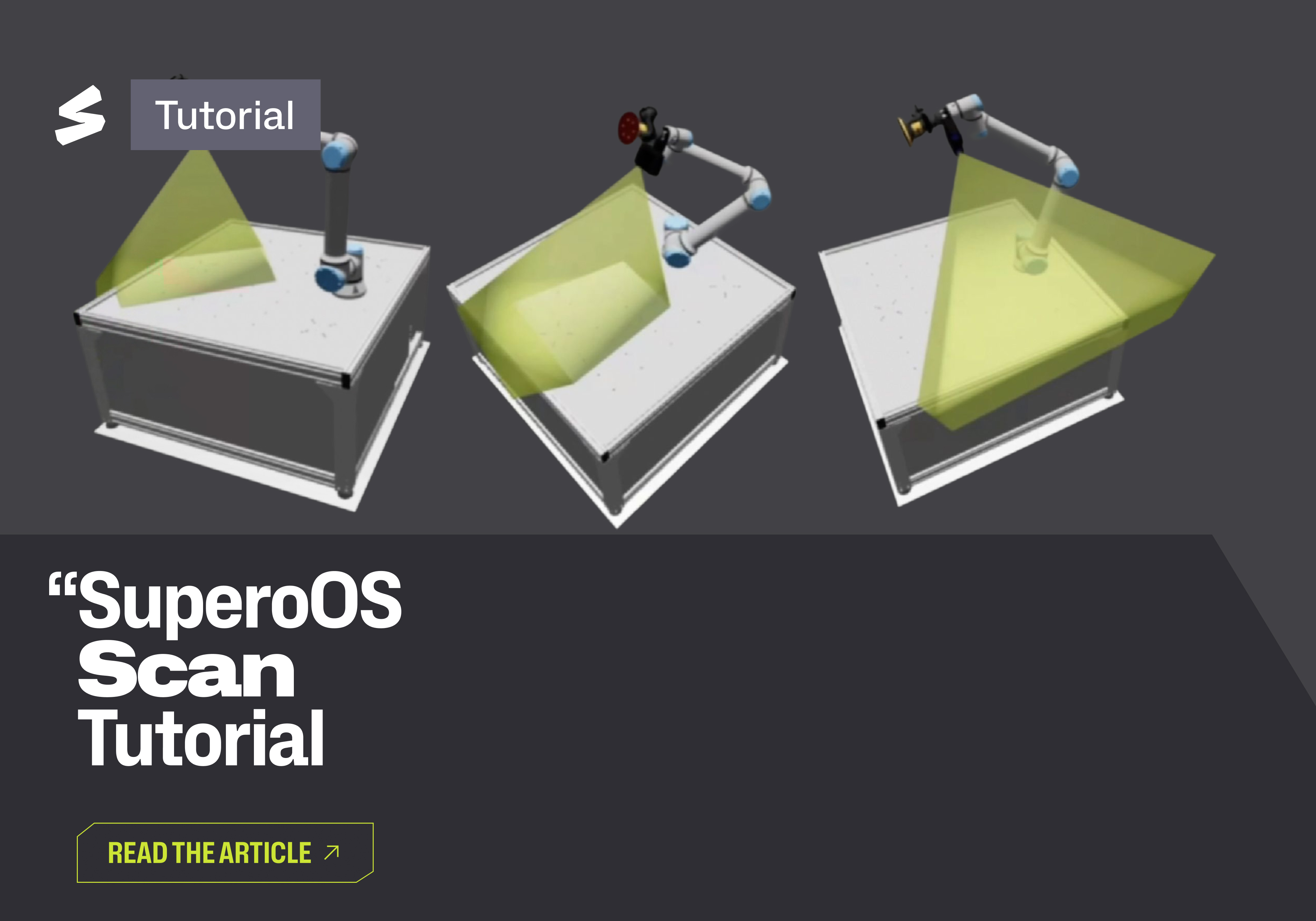
Once the part has been positioned within the working volume, the operator simply needs to press the “Scan” button. From that moment on, SuperoOS, using the Zivid 2+ LR110 3D camera fully integrated into the system, automatically manages the scanning process. The robot executes a sequence of predefined positions whilst the camera captures high-precision colour 3D scans from different viewpoints.
The LR110’s working distance, ranging from 700 to 1700 mm, allows us to handle parts of very different sizes and shapes, giving operators the freedom to position objects roughly. Each scan is aligned with the robot’s reference system and integrated into a single point cloud via automatic post-processing. During the procedure, the operator can monitor everything directly from the digital twin interface, including a real-time view of the camera’s field of view for each capture position.
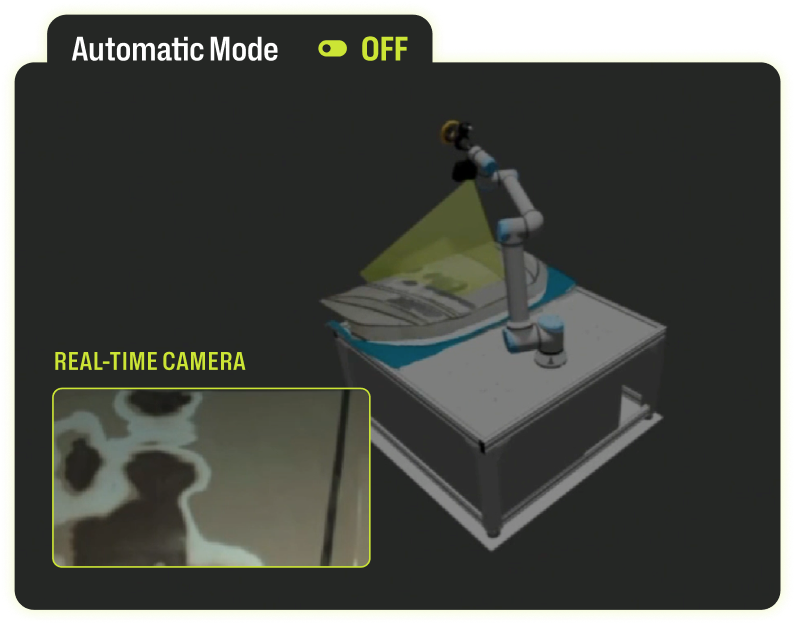
You're in control too.
For applications that require more flexibility, the automatic scan sequence can be edited manually. Operators can add new poses, remove existing ones or modify the sequence directly from the interface. Selecting a custom pose automatically moves the camera into the correct position.
Manual Mode also enables live camera streaming, allowing the operator to see exactly what the sensor is capturing while guiding the robot in Freedrive.
No manual coordinate input. No complex robot programming.
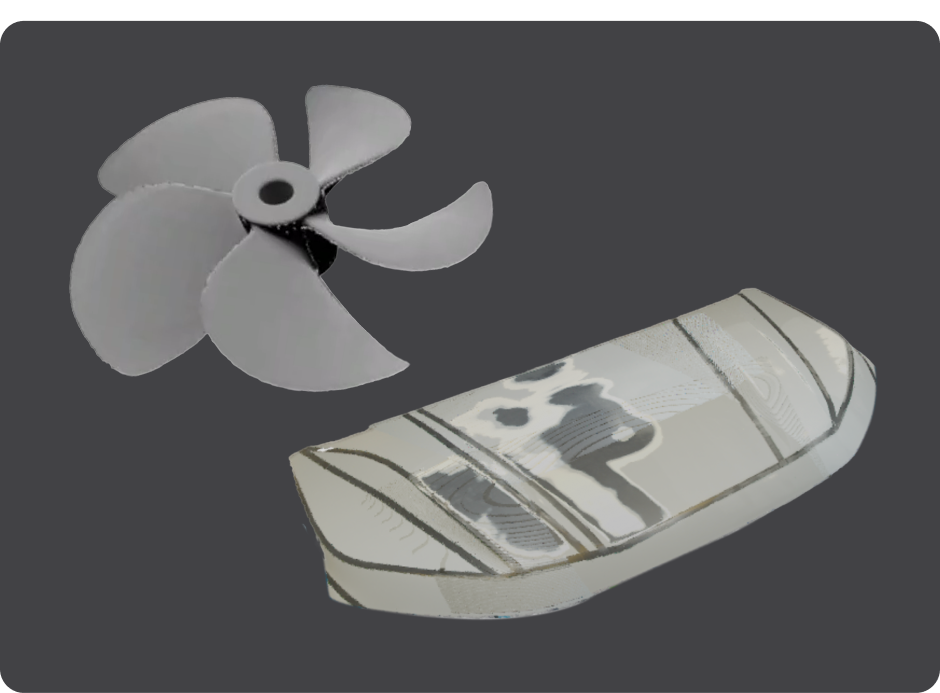
Just the part, please.
During processing, Supero automatically filters out everything that doesn't belong to the component itself. Work surfaces, fixtures and background elements are removed through surface clustering and cleanup algorithms, leaving only the scanned part.
The result is a clean, accurate, full-colour 3D reconstruction, regardless of the component’s geometry or complexity.
An accurate, colour 3D model of the actual component, generated via a guided workflow designed to be accessible even to operators with no experience in robot programming.
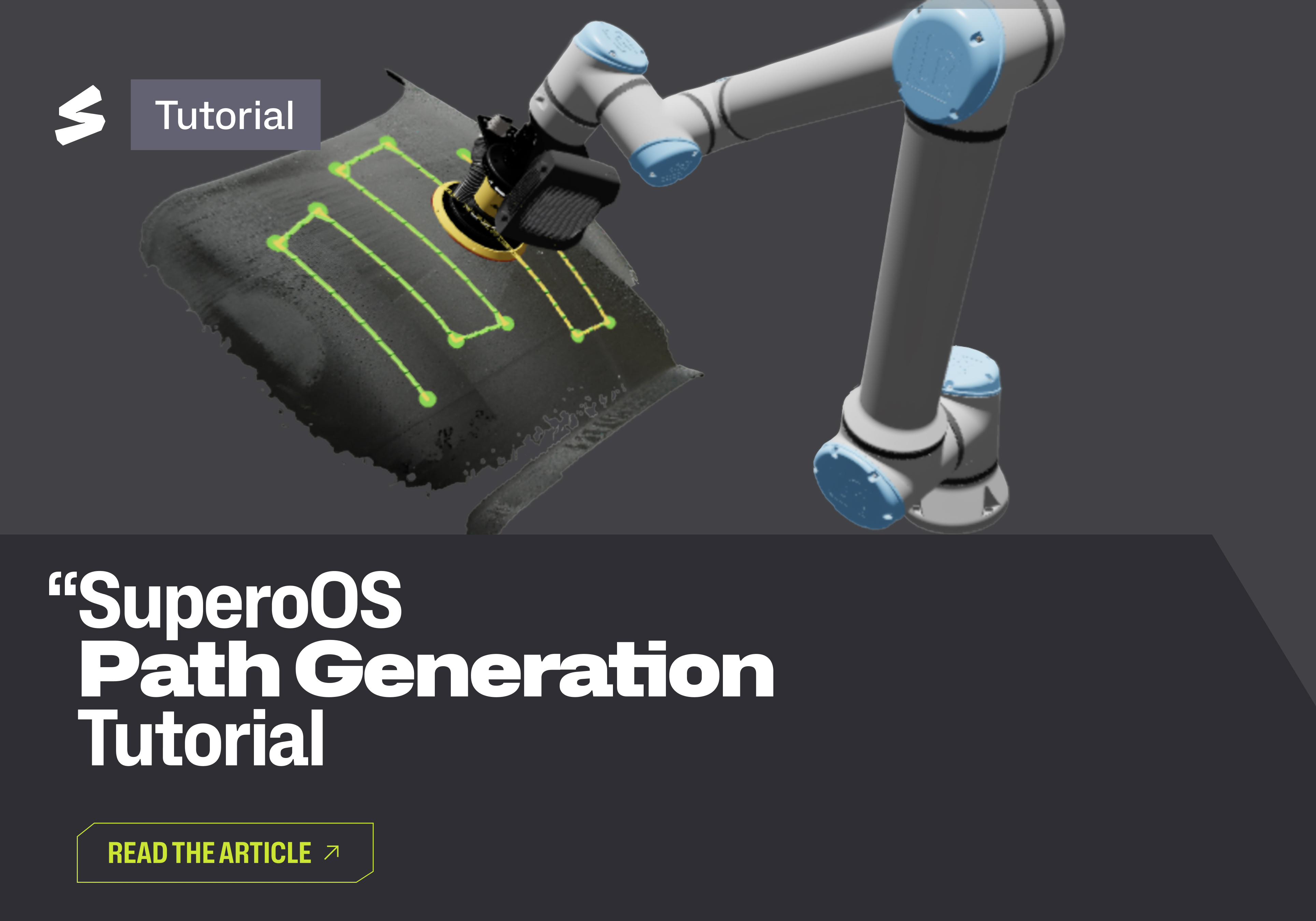
This reconstruction forms the basis for all subsequent stages within Supero: toolpath generation, quality control and repeatable robotic finishing operations. Point clouds with sub-millimetre precision allow us to implement an extremely accurate collision avoidance system, ensuring that only the intended part of the tool interacts with the workpiece.
Watch the full tutorial.
Want to see the Supero Scan Phase in action, from the first click to the final 3D model? Watch the full video tutorial on our YouTube channel and walk through every step of the workflow.
Want to see it in your process?
The Scan Phase is the first step of the Supero workflow. Request a demo at superotech.ai and we'll show you how it fits your production line.
Want to dive deeper into our collaboration with Zivid? Read the full case study published by Zivid on our robotic sanding solution.